

Energy Recovery in seawater reverse osmosis Systems
Energy consumption is one of the most important considerations in seawater reverse osmosis (SWRO) desalination systems. Unlike freshwater treatment processes, Seawater Desalination requires high operating pressure because seawater contains high concentrations of dissolved salts and naturally has significant osmotic pressure.
In an SWRO system, the high-pressure pump provides the driving force required to push seawater through the reverse osmosis membranes. However, after water passes through the membrane, the remaining concentrate stream still contains a large amount of hydraulic energy. Without recovery, this pressure energy would normally be lost through pressure control valves or discharge systems.
Energy recovery technology allows SWRO systems to capture and reuse part of this hydraulic energy. By transferring energy from the high-pressure concentrate stream back to the incoming seawater feed, energy recovery devices reduce the workload of high-pressure pumps and improve overall system efficiency.
Modern large-scale Seawater Desalination Plants widely use energy recovery equipment as a key component of efficient SWRO design. Understanding how these systems work helps engineers optimize equipment selection, reduce operating costs, and improve long-term desalination performance.
Why Energy Recovery Is Important in SWRO Systems
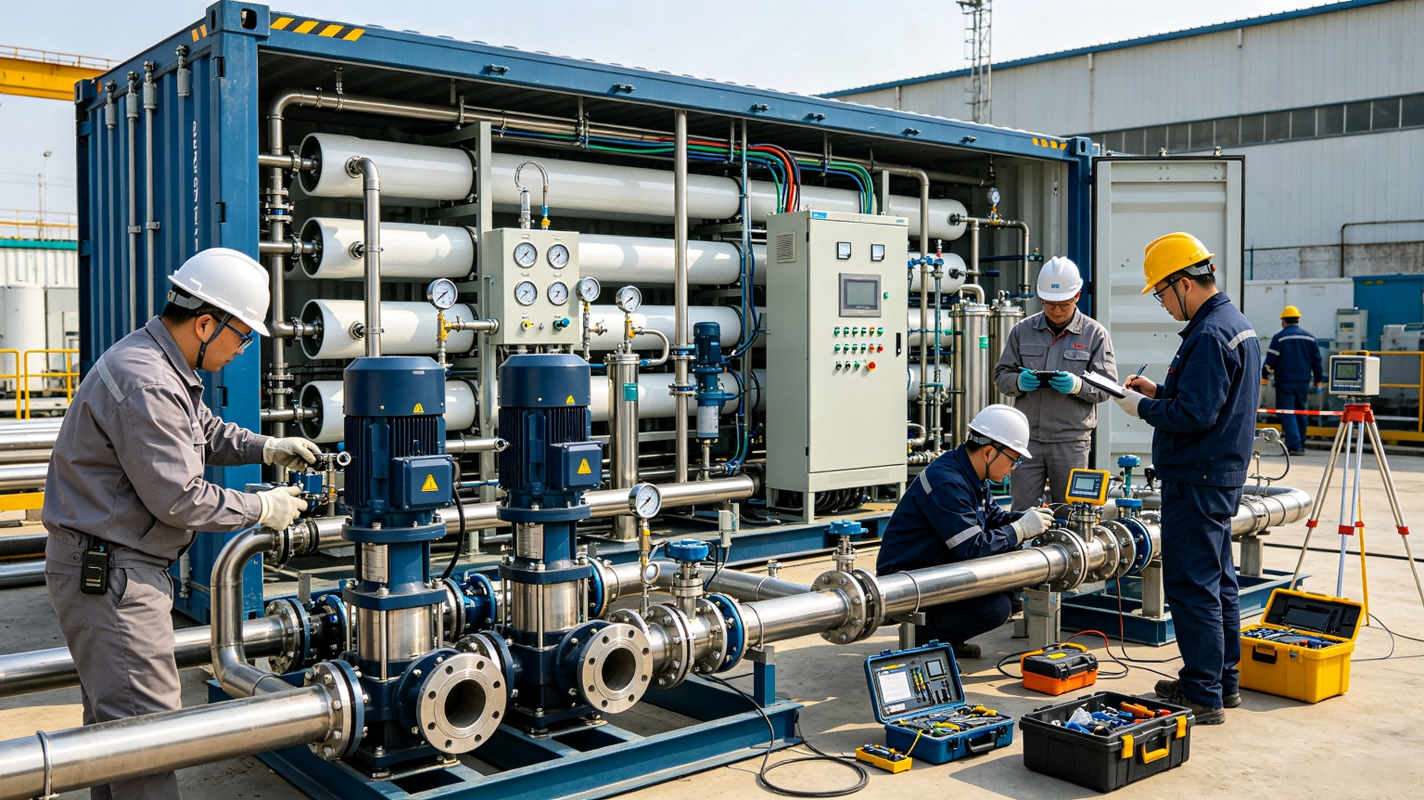
The main challenge of seawater reverse osmosis is overcoming the natural osmotic pressure of seawater.
Typical SWRO systems require high pressure to separate freshwater from dissolved salts. The exact operating pressure depends on:
Seawater salinity
Temperature
Membrane characteristics
Recovery rate
System design
The high-pressure pump is usually the largest energy-consuming component in an SWRO plant.
Energy consumption affects:
Operating cost
Plant efficiency
Equipment selection
Long-term project economics
Reducing unnecessary energy loss is therefore an important engineering objective.
During SWRO operation, only part of the seawater becomes product water.
The remaining stream becomes concentrated seawater, also known as brine or concentrate.
Although the concentrate has a higher salt concentration, it still leaves the RO system under high pressure.
This concentrate stream contains valuable hydraulic energy.
Without energy recovery:
High-pressure concentrate → pressure reduction → energy loss
With energy recovery:
High-pressure concentrate → energy transfer device → reduced pump energy requirement
This simple principle is the foundation of modern SWRO energy optimization.
How Energy Recovery Works in SWRO Systems
An energy recovery system transfers pressure energy from the concentrate stream to the incoming seawater feed.
The basic process includes:
High-pressure seawater enters the RO membrane system.
Freshwater passes through the membrane.
High-pressure concentrate leaves the membrane pressure vessels.
Energy recovery equipment captures concentrate pressure.
The recovered energy assists seawater pressurization.
The high-pressure pump requires less power.
The recovery process does not reuse the concentrate itself. Instead, it transfers hydraulic energy while maintaining separation between seawater feed and concentrate streams.
Types of Energy Recovery Devices
Several types of energy recovery technologies have been used in SWRO systems.
Pressure exchangers are among the most commonly used energy recovery devices in modern large-scale SWRO plants.
The working principle is based on direct pressure transfer.
High-pressure concentrate enters the pressure exchanger and transfers its pressure to incoming seawater.
Main advantages include:
High energy recovery efficiency
Low energy loss
Compact structure
Reliable operation
Because of these advantages, pressure exchangers are widely applied in large seawater desalination facilities.
Turbochargers use hydraulic energy from the concentrate stream to assist seawater pressurization.
The device usually consists of:
Hydraulic turbine section
Pump section
Rotating components
The concentrate flow drives the turbine, which helps increase feed pressure.
Compared with pressure exchangers, turbocharger systems have different performance characteristics and may be selected according to project requirements.
Energy recovery turbines convert hydraulic energy into mechanical energy.
The recovered energy can assist pump operation or reduce electrical power demand.
These systems are based on turbine technology and are suitable for specific desalination applications.
Selection depends on:
Plant capacity
Operating pressure
Efficiency requirements
Maintenance considerations
Pressure Exchanger Technology in SWRO
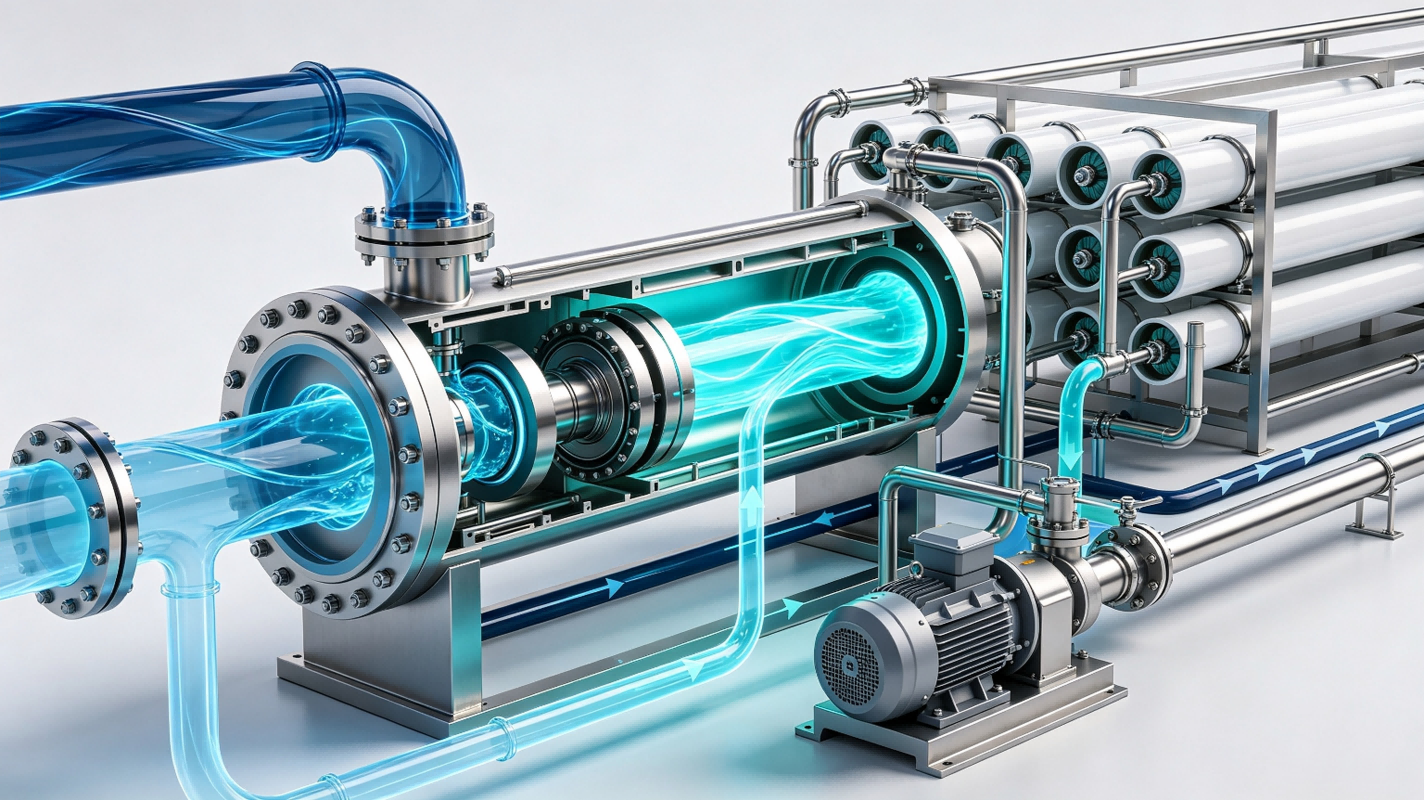
Pressure exchangers have become an important technology in modern SWRO engineering.
Inside the device, hydraulic pressure is transferred through a rotating or reciprocating process between high-pressure concentrate and incoming seawater.
The key concept is:
Recover pressure instead of generating all pressure from electricity.
A pressure exchanger system typically works together with:
Seawater feed pump
Booster pump
RO membrane system
Concentrate discharge system
Proper integration ensures stable pressure distribution throughout the SWRO process.
Energy Recovery and High-Pressure Pump Design
Energy recovery devices influence high-pressure pump selection.
Without energy recovery, the high-pressure pump must provide almost all required pressure.
With energy recovery:
Pump duty can be reduced
Electrical demand decreases
System efficiency improves
Engineers consider several factors when matching pumps and energy recovery equipment:
Required flow rate
Operating pressure
Recovery efficiency
Pressure losses
System control strategy
The goal is to achieve stable membrane operation while minimizing unnecessary energy consumption.
Energy Recovery in Large-Scale SWRO Plants
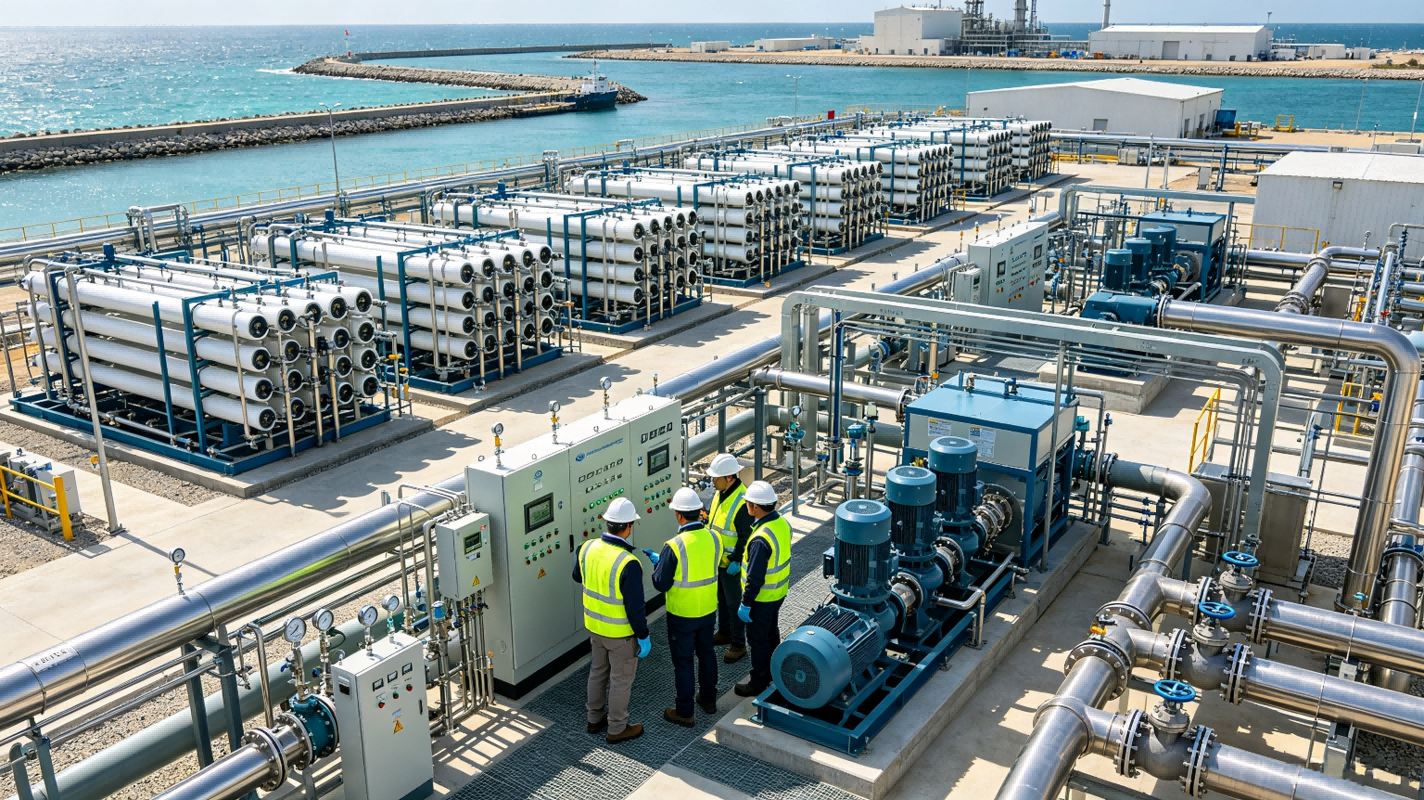
Large desalination facilities benefit significantly from energy recovery systems.
A typical large-scale SWRO plant may include:
Seawater intake system
Pretreatment units
High-pressure pumping station
Energy recovery devices
RO membrane arrays
Post-treatment systems
Product water storage
Because these plants operate continuously, even small efficiency improvements can have significant impacts over time.
Energy recovery helps improve:
Energy utilization
System operating stability
Long-term cost management
Environmental performance
Factors Affecting Energy Recovery Performance
The performance of an energy recovery system depends on several engineering factors.
Seawater characteristics influence system pressure requirements.
Important parameters include:
Salinity
Temperature
Osmotic pressure
Seasonal changes
Higher salinity seawater generally requires higher operating pressure.
Recovery rate refers to the percentage of feed seawater converted into freshwater.
Higher recovery rates may increase concentrate pressure and influence energy recovery conditions.
Engineers must balance:
Water production
Membrane performance
Concentrate management
Energy efficiency
Energy recovery devices must match the complete SWRO system.
Important considerations include:
Device capacity
Flow compatibility
Pressure range
Control requirements
Maintenance requirements
Incorrect matching may reduce efficiency or affect system stability.
Benefits of energy recovery in SWRO systems
The primary advantage of energy recovery is reducing electrical demand.
By reusing concentrate pressure, the system requires less energy from the high-pressure pump.
Electricity is a major operating expense for desalination plants.
Reducing energy consumption helps improve the economic performance of SWRO projects.
Energy recovery allows more efficient use of hydraulic energy within the desalination process.
Modern SWRO plants combine:
Efficient membranes
Optimized pumps
Energy recovery devices
Advanced control systems
to achieve better overall performance.
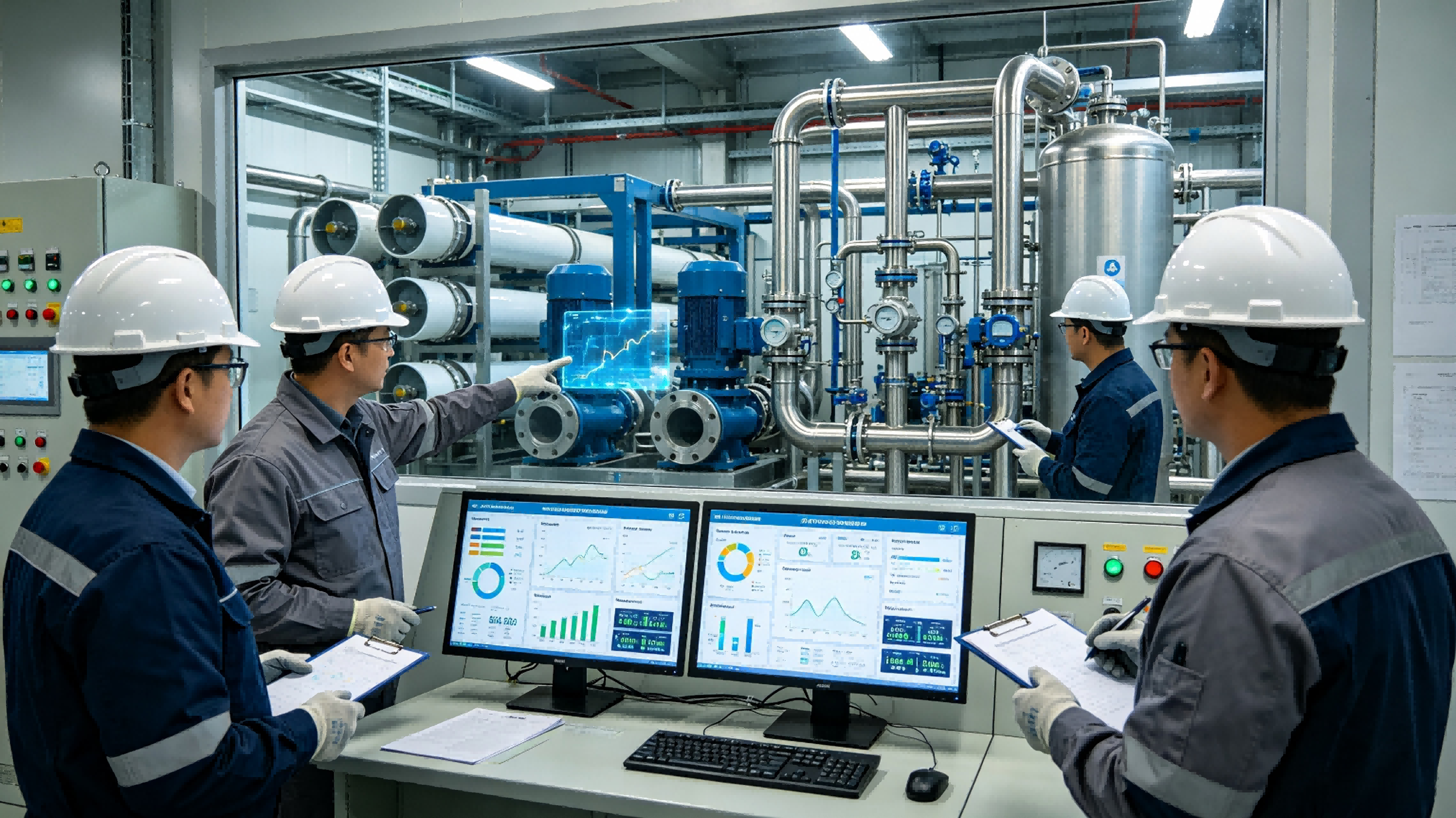
Energy efficiency is becoming increasingly important in water treatment.
Lower energy consumption can help reduce the environmental impact associated with desalination operation.
For projects using renewable power sources, efficient SWRO systems also improve compatibility with variable energy supply.
Installation Considerations for Energy Recovery Equipment
Proper installation is important for reliable operation.
Engineers should consider:
Energy recovery devices require correct connection between:
Concentrate outlet
Seawater feed line
Booster pump
RO system
Poor piping design may cause unnecessary pressure losses.
Monitoring equipment helps maintain stable operation.
Typical parameters include:
Feed pressure
Concentrate pressure
Flow rate
Pump performance
Energy consumption
Although modern energy recovery devices are designed for reliability, maintenance planning remains important.
Considerations include:
Equipment accessibility
Spare parts availability
Inspection procedures
Operating data monitoring
Energy Recovery Maintenance and Monitoring
Regular monitoring helps identify performance changes.
Operators may review:
Pressure transfer efficiency
Flow stability
Abnormal vibration
Pressure fluctuations
Pump power consumption
Maintenance requirements depend on equipment type and operating conditions.
A well-maintained energy recovery system supports consistent SWRO performance.
Energy Recovery in Small and Modular SWRO Systems
Large desalination plants commonly use energy recovery systems, but smaller SWRO applications may also benefit depending on capacity and operating conditions.
Applications include:
Island desalination units
Offshore water supply systems
Industrial seawater treatment projects
For smaller systems, engineers must evaluate whether the additional equipment complexity is justified by energy savings.
The final design depends on:
Production capacity
Operating hours
Energy cost
Installation conditions
Future Development of SWRO Energy Recovery Technology
SWRO energy recovery continues to develop alongside improvements in membranes, pumps, and automation.
Future system improvements may focus on:
Higher recovery efficiency
More compact equipment
Improved control systems
Better integration with renewable energy
Reduced maintenance requirements
As seawater desalination expands worldwide, energy optimization will remain an important part of SWRO engineering design.
Conclusion
Energy recovery is a key technology for improving the efficiency of seawater reverse osmosis systems.
By recovering hydraulic energy from the high-pressure concentrate stream, energy recovery devices reduce the workload of high-pressure pumps and improve overall desalination performance.
Pressure exchangers, turbochargers, and energy recovery turbines provide different technical approaches for optimizing SWRO operation. The appropriate solution depends on system capacity, seawater conditions, project requirements, and maintenance strategy.
For modern seawater desalination projects, energy recovery is no longer only an optional improvement. It has become an important engineering consideration for achieving efficient, reliable, and sustainable freshwater production from seawater.
本网站使用 cookie 来确保您在我们的网站上获得最佳体验。
 English
 Portugues
 Pусский
 Français
 العربية
 ไทย
ไทย Indonesia
 Melayu
 Tiếng Việt
 қазақ
қазақ עִברִית
 မြန်မာ
 ພາສາລາວ
 Filipino
 o'zbek
 Кыргызча
 тоҷикӣ
 ខ្មែរ
ខ្មែរ Türkmenler



 电话
电话
评论
(0)